Stephen Lawson

Stephen Lawson served on three deployments with the US Navy and is currently a helicopter pilot and commissioned officer in the Kentucky National Guard. He earned a Masters of Business Administration from Indiana University Southeast in 2018, and currently lives in Louisville, Kentucky with his wife. Stephen’s writing has appeared in Writers of the Future Volume 33Orson Scott Card’s InterGalactic Medicine ShowGalaxy’s EdgeDaily Science Fiction, and at Baen.com. He’s written two episodes of The Post-Apocalyptic Tourist’s Guide, which he also edits. His blog can be found at stephenlawsonstories.wordpress.com.

His story, “No Plan Survives First Contact”, appears in the Weird World War III anthology.


Tell me about yourself. Where are you from? What’s your background?


I live in Louisville, KY now but I’ve been all over. I grew up in small towns in Ohio as a Methodist preacher’s kid, joined the Navy at 18, got out five years and three deployments later, and enrolled at Asbury University in Wilmore, KY. After college I joined the National Guard, went to flight school, and started writing amidst active duty work and getting an MBA from Indiana University Southeast. I fly helicopters and I do commissioned officer stuff when I’m not writing. Sean (the editor) and I were in volume 33 of L. Ron Hubbard’s Writers of the Future, and attended the Dave Farland/Tim Powers workshop together. Sean’s been a good friend ever since.


Which of your short stories is your favorite? Why?


They’re all special to me–even a few that I haven’t found a market for. Those are my weird little children and I love them. The story that’s done the best is “Homunculus.” It’s a hard science fiction story about a fledgling colony on Titan, and I did a lot of research for it. It won the 2018 Jim Baen Memorial Short Story Award, and was selected for volume 5 of The Year’s Best Military and Adventure Science Fiction edited by David Afsharirad. Maybe that’s my favorite? Ask tomorrow and I’ll tell you something different.


What author has had the greatest influence on your writing? Why?


In short: C.S. Lewis, Robert Heinlein, Michael Crichton, and team writers Douglas Preston & Lincoln Child. I love Lewis’s casual and accessible theology woven into adventure stories. “Out of the Silent Planet” is in a genre all its own, but it’s one I’m attempting to expand. Robert Heinlein is the master of adventure SF, and Michael Crichton the master of making you feel quite a bit smarter after you’ve read his work. I’ve been a huge fan of Preston & Child’s Pendergast series for several years, and I strive to create characters and places the way they do, especially in “Relic” and “Reliquary.”


Tell me about a time you almost died.


There have been a few. One that sticks out is the first and only time I went skydiving, when I was maybe 19. I saw this guy come in for a graceful deceleration and landing on the drop before my group. I decided I wanted to tip-toe onto the earth like a butterfly also, so when I was about a hundred feet from the ground, I pulled on both of the steering toggles at the same time to brake the chute. It did, in fact, slow down, but in shutting off the airflow through the chute’s cells, I collapsed the chute and went back into freefall. The guy on the little radio they gave me instructed me to, “Let go. Right now,” which I did. My chute reopened, but I hit the ground pretty hard—NOT like a delicate butterfly–and forward-rolled before landing in a heap. I did not break any bones, thankfully, but I decided not to try to be a pro on the first attempt at anything ever again.


Tell us something about you that very few people know.


I have a pet rabbit. I got him for my wife, but he’s my writing assistant most of the time. He basically litter-trained himself and is fairly low maintenance. A lot of writers seem to have cats. Rabbits do not jump on your keyboard while you’re writing. They just bug you for snacks and occasional cheek rubs. Rabbits are the perfect writer’s pet that the world doesn’t know about.


Story’s Soundtrack

Each of the stories in this volume evoked certain themes and emotions that can sometimes be approximated with music. The below video is the editor’s best interpretation of the feelings and themes that this author’s story evoked. Please note that this is only the editor’s interpretation. The author did not know this portion of the blog post existed until the editor published it.


Order Weird World War III Now


2020-10-06T00:00:00

  days

  hours  minutes  seconds

until

Weird World War III Release Date
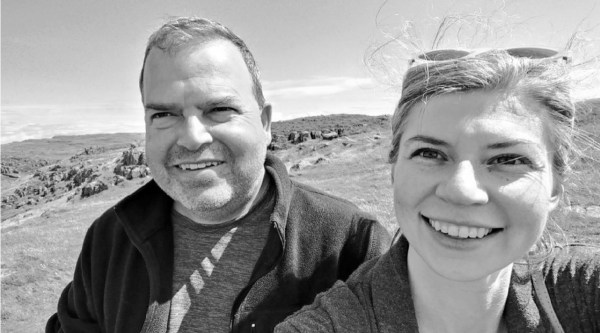
Xander and Marina Lostetter

Marina J. Lostetter lives with the subsequent geek, as well as two capricious house cats. She enjoys globe-trotting, board games, and all things art related. Marina’s numerous original short stories have appeared in venues such as LightspeedOrson Scott Card’s InterGalactic Medicine Show, and Uncanny Magazine, while her sci-fi novels, including NOUMENON and NOUMENON INFINITY, are available from Harper Voyager. She has also written tie-in materials for the Aliens and Star Citizen franchises.  Marina tweets as @MarinaLostetter and her website can be found at http://www.lostetter.net.

Dr. Xander Lostetter earned his doctorate in microelectronics-photonics engineering from the University of Arkansas in 2003. He subsequently took his research commercial, building a tech company that developed state-of-the-art power electronics solutions for military and defense programs, spacecraft, satellites, renewable energy, and electric vehicles. Dr. Lostetter has been awarded over two dozen patents, is the author of more than one hundred engineering publications, and has been the recipient of three international R&D 100 Awards for top technology breakthroughs. He currently lives in Arkansas with his wife, Marina, where the two love strategy games, arguing Kirk vs. Picard, and spending their time engaging in all things geeky.

Their story, “Tap, Tap, Tapping in the Deep”, appears in the Weird World War III anthology.


Tell me about yourself. Where are you from? What’s your background?


Xander: I’m from a tiny blue-green rock orbiting your average yellow dwarf star at a distance of approximately 8 1/2 light minutes. On that tiny rock, I live in Fayetteville Arkansas in the United States. I have a doctorate degree in microelectronics engineering, but can often be found secretly building Legos by moonlight.

Marina: I live with that weirdo. I write sci-fi and fantasy full time.


What authors have had the greatest influence on your writing? Why?


Xander: Terry Pratchett, because well, he’s pure genius. Philip K. Dick for his mind blowing philosophy. Stephen King is the ultimate in the study of character psychology. And Tim O’Brien has the uncanny ability to get to the core of very dark but real human experiences.

Marina: Tolkien made me fall in love with SFF, Tanith Lee and Madeleine L’Engle made me want to become a writer, and Dan Simmons made me fall in love with space-opera–the formatting of his novel, Hyperion, had a huge influence on my own space-opera series, Noumenon.


Besides yourself, which other contemporary authors would you recommend?


Xander: Stephen Baxter’s Manifold series and the Hyperion series by Dan Simmons are two of my all-time favorites, since I love well written hard science fiction. I like Max Brooks for his zombie work, especially World War Z. Katherine Applegate’s The One and Only Ivan and Siobhan Dowd’s / Patrick Ness’ A Monster Calls are both amazing works on the nature of humanity.

Marina: Nicky Drayden writes great genre-mashups, like The Prey of Gods; JY Yang writes brilliant fantasy, such as the Tensorate series; Megan O’Keefe performs incredibly skilled unreliable narrator work in Velocity Weapon; and Max Gladstone and Amal El-Mohtar have done fascinating epistolary work in This is How You Lose the Time War


What kinds of stories do you write? Why?


Xander: I am always fascinated with science fiction and fantasy, because it allows you to push the boundaries of “what if” beyond any limits of the imagination. To me, these are the ultimate playgrounds for creative exploration.

Marina: I tend to write stories about re-establishing understanding. That might mean a sci-fi story where the characters think an alien megastructure is meant to do one thing, but instead it does something completely unexpected. Or a fantasy story where magic seems to play by one set of rules, but the character’s conception of their world is all wrong. I try to tell stories with layers, where the over-arching conflict, personal conflict, and inner conflict are all intimately entangled.


What’s your favorite book? Why?


Xander: The Hobbit, because at the age of 10 it introduced me to the amazing world of fantasy literature. Star Trek, though not one book, is also a sentimental favorite. At that same early age of 10, it was the inspiration that filled me with the passion to pursue the path of becoming an engineer and loving all things “space”. When I was young, and the original TV show was in reruns, I gobbled up Star Trek books as fast as they could publish them.

Marina: Hyperion gets a hattrick here. I also love Vellum by Hal Duncan because of how masterfully complex it is; Vicious by V.E. Schwab is super-anti-hero melodrama at its finest; and Wolf Tower by Tanith Lee is my go-to comfort read.


Story’s Soundtrack

Each of the stories in this volume evoked certain themes and emotions that can sometimes be approximated with music. The below video is the editor’s best interpretation of the feelings and themes that this author’s story evoked. Please note that this is only the editor’s interpretation. The author did not know this portion of the blog post existed until the editor published it.


Order Weird World War III Now


2020-10-06T00:00:00

  days

  hours  minutes  seconds

until

Weird World War III Release Date

Kevin Andrew Murphy

Kevin Andrew Murphy grew up in California, earning degrees from UCSC in anthropology/folklore and literature/creative writing, and a masters of professional writing fromUSC. Over the years he’s written roleplaying games, short stories, novels, plays, and poems, andcreated the popular character Penny Dreadful for White Wolf, including writing the novel of thesame name. Kevin’s also a veteran contributor to George R.R. Martin’s Wild Cards series. His Wild Cards story “Find the Lady” for Mississippi Roll won the Darrell Award for Best Novella for 2019, and he has a graphic novel featuring his character Rosa Loteria currently being illustrated, plus other projects in the works he can’t announce just yet. He brews mead, plays games, and like a proper medieval gentleman, has a whippet.

His story, “Anastasia’s Egg”, appears in the Weird World War III anthology.


Tell me about yourself. Where are you from? What’s your background?


I’m from California and grew up in Silicon Valley. I  went to college at UCSC and grad school at USC, majoring in creative writing and anthropology as an undergrad and professional writing for my masters.


What kinds of stories do you write? Why?


I write fantasy and science fiction with occasional horror or mystery and usually involve some mythology and literary allusions and oftentimes comedy as well. It depends on the story.


Which of your short stories is your favorite? Why?


I’ve written so many stories that it’s hard to pick a favorite, but “Find the Lady” in Mississippi Roll, one of the recent Wild Cards volumes, won the Darrell Award for Best Novella last year, so I’m very happy with that. That was one of my forays into romance as well, so I’m so glad people liked it.


What author has had the greatest influence on your writing? Why?


Of all the authors I’ve read, I think my biggest influences were my favorites as a child, Joan Aiken and John Bellairs. I consider myself a stylist and I think I get that from Aiken, who in turn was inspired by Jane Austen. Bellairs showed me the fun writers could have with dark magic and the occult.


What’s the craziest thing you’ve ever done? Tell me about a time you almost died.


Craziest thing I’ve done is also the time I might have died. I was in college going caving with my girlfriend and my best friend and I was rappelling down a twenty-foot chute when I thought the rope might be slipping. Made a snap judgement for safety and skinned my finger going down. But we found the coffee can at the bottom of the cave with all the signatures of the deepest delvers. The cave was blocked off a few years later for safety.


What was your favorite subject in school? Why?


My favorite subject in school was English, since I love literature and writing. Perversely penmanship was my worst subject in grade school, but once I learned how to type I never looked back.


What’s your favorite book? Why?


My favorite book is probably Through the Looking Glass, the sequel to Alice in Wonderland. It showed me how a sequel is written and has an excellent basic plot.


If you could live in any time period, when would it be? Why?


As for times to live, while I really like the present, the Baroque era had so much fun stuff in it if you had the money. Of course that’s always the problem even with the present.


Story’s Soundtrack

Each of the stories in this volume evoked certain themes and emotions that can sometimes be approximated with music. The below video is the editor’s best interpretation of the feelings and themes that this author’s story evoked. Please note that this is only the editor’s interpretation. The author did not know this portion of the blog post existed until the editor published it.


Order Weird World War III Now


2020-10-06T00:00:00

  days

  hours  minutes  seconds

until

Weird World War III Release Date
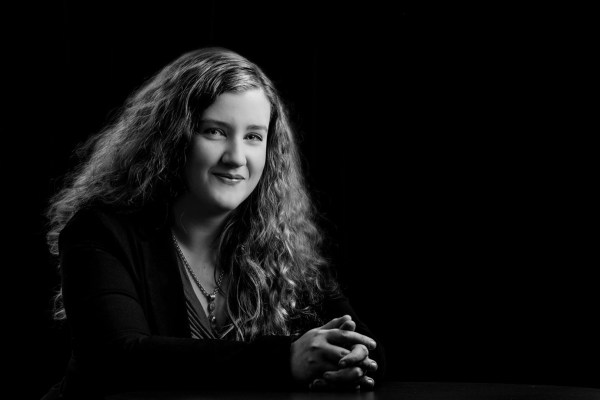
C. L. Kagmi

C. L. Kagmi is an award-winning and bestselling writer of short science fiction. She holds a degree in neuroscience from the University of Michigan and spent five years working in clinical research before striking out as a full-time freelance editor and ghostwriter. Her short story “The Drake Equation” was a winner of the Writers of the Future contest and appeared in the bestselling anthology Writers of the Future Volume 33 in 2017. Her other short stories have appeared in issues 2 and 5 of Compelling Science Fiction and the anthologies Crash Philosophy and Compelling Science Fiction: The First Collection.

Her story, “Evangeline”, appears in the Weird World War III anthology.


Tell me about yourself. Where are you from? What’s your background?


I was born in Ann Arbor, Michigan, which most any Michigander will tell you is an interesting city (though whether they mean that as a compliment or an insult depends on where they’re from). It’s home to the University of Michigan, and it was basically settled by a bunch of hippies back in the 60s and 70s. 

When I graduated high school, there was no question in my mind about where I wanted to go. The U of M – not just because I had hometown spirit, but because it had an unusual combination of stellar art and science programs. By this time I was already infatuated with science fiction because I’d figured out it meant you could put art and science together.

I got my Neuroscience BS there and worked at the University’s Mott Children’s Hospital coordinating clinical research for five years. Then I realized I was spending as much time helping researchers with their writing as I was coordinating research, so I became a full-time ghostwriter and editor.

I’m now located in Chicago, which I must admit has even more going on than Ann Arbor. I think we’ve got about half a dozen colleges and one of the best public transit systems in the country. You can find anything you want in Chicago – for better or worse.


What kinds of stories do you write? Why?


I like to predict the future. Or try to. Ironically I did have us on schedule for a pandemic very similar to the coronavirus in my fictional universe, but not for another 100 years. Also the mortality rate was much higher, so we can be thankful for that. This isn’t a full apocalypse. Just about 2% of one.

I’m particularly interested in evolutionary biology and cybernetics. I don’t feel that either discipline has been explored to its fullest extent yet in fiction, and things get even more interesting when you predict how humans will respond to these developments.

In this book I’ve made a rare branching into magical realism or alternate universe speculative fiction. “Evangeline” is inspired by a real-life court case in which a psychic medium was charged with witchcraft – because she was leaking government secrets to the public, but the government couldn’t find enough evidence of how she was getting her information to charge her with espionage.


What authors have had the greatest influence on your writing? Why?


Frank Herbert, Octavia Butler, and Greg Bear are my three biggest influences. Greg Bear’s novella “Hardfought” remains one of my favorite pieces of literature of all time, and when I first discovered Octavia Butler I was totally astounded because it was like she was doing exactly what I wanted to do, but so much better. It’s amazing to consider how ahead-of-her-time she was.


What is your favorite speculative fiction genre? Why?


I am mostly a sucker for science fiction, because the element of science and futurism is tantalizing to me. However, I’ve been considering making more forays into magical realism and fantasy as places where emotional realities can be manifested as magic. We definitely live in a time where our society needs a plan for doing emotional work – maybe even more than we need scientific or technological advancement.


If you could live in any time period, when would it be? Why?


Honestly, the present is pretty interesting. Even if “interesting times” can sometimes be a curse. The only other time period I might choose would be being born in the future, so I can see how things turn out. We’re writing some hella interesting chapters of history right now.


Story’s Soundtrack

Each of the stories in this volume evoked certain themes and emotions that can sometimes be approximated with music. The below video is the editor’s best interpretation of the feelings and themes that this author’s story evoked. Please note that this is only the editor’s interpretation. The author did not know this portion of the blog post existed until the editor published it.


Order Weird World War III Now


2020-10-06T00:00:00

  days

  hours  minutes  seconds

until

Weird World War III Release Date

Eric James Stone

Eric James Stone is a past Nebula Award winner, Hugo Award nominee, and Writers of the Future Contest winner. Over fifty of his stories have been published in venues such as Year’s Best SFAnalog Science Fiction and Fact, and Nature. His debut novel, a science fiction thriller titled Unforgettable, published by Baen Books, has been optioned by Hollywood multiple times. 

Eric’s life has been filled with a variety of experiences. As the son of an immigrant from Argentina, he grew up bilingual and spent most of his childhood living in Latin America. He also lived for five years in England and became trilingual while serving a two-year mission for his church in Italy.

He majored in political science at BYU (where he sang in the Russian Choir for two years) and then got a law degree from Baylor. He did political work in Washington, D.C., for several years before shifting career tracks.

He now works as a systems administrator and programmer. Eric lives in Utah with his wife, Darci, who is an award-winning author herself, in addition to being a high school science teacher and programmer. Eric’s website is www.ericjamesstone.com.

His story, “Deniability”, appears in the Weird World War III anthology.


Tell me about yourself. Where are you from? What’s your background?


I grew up mostly outside the United States (Argentina, Peru, Venezuela, England) because my dad worked in international business. I majored in political science at Brigham Young University, got a law degree from Baylor, and then worked in politics in Washington, DC, for about five years. Twenty years ago I moved back to Utah and shifted my career to web development and systems administration, which I’ve been doing ever since.


Which of your short stories is your favorite? Why?


My favorite is “Rejiggering the Thingamajig,” originally published in Analog Science Fiction and Fact. It’s about a sapient T. Rex on a quest to restore the galactic teleport network with the help of an insane talking gun. I probably had more fun writing that story than any other. It probably has my best first line, too: The teleport terminal had not been built with tyrannosaurus sapiens in mind.


Tell me about a time you almost died.


When I was eight years old, my dad took me on a week-long fishing trip in Bariloche, Argentina. Because of an airline strike that canceled our flight after we got to the airport, my dad decided we would make the 1600-kilometer (1000-mile) drive from Buenos Aires. That night, as we drove along a two-lane highway, a tractor-trailer truck driving the opposite direction came over a hill in front of us, and it was driving down the middle of the highway.  My dad swerved off the road to avoid being hit, our tires hit gravel, and I’m not sure exactly how it happened after that, but the car spun through 360 degrees and stalled, leaving us facing our original direction in the wrong lane. Since truckers often traveled in convoys, my dad’s biggest worry was that another truck was going to come over the hill and smash into us, but fortunately there were no following vehicles. My dad got the car started again, and we continued on our way. As we were heading home after our week of fishing, we found the place where our near-accident occurred. In the daylight, we could see our skid-marks on the pavement — and the sheer cliff at the side of the road that we barely avoided falling over.


If you could live anywhere in the world, where would it be?


1600 Pennsylvania Ave NW, Washington, DC 20500


What’s your favorite book? Why?


My favorite book is Cry, the Beloved Country by Alan Paton, because it’s beautifully written and the story is emotionally powerful. I will be proud if I ever manage to write anything even half as good as that novel.


Story’s Soundtrack

Each of the stories in this volume evoked certain themes and emotions that can sometimes be approximated with music. The below video is the editor’s best interpretation of the feelings and themes that this author’s story evoked. Please note that this is only the editor’s interpretation. The author did not know this portion of the blog post existed until the editor published it.


Order Weird World War III Now


2020-10-06T00:00:00

  days

  hours  minutes  seconds

until

Weird World War III Release Date

Blog at WordPress.com.

Up ↑