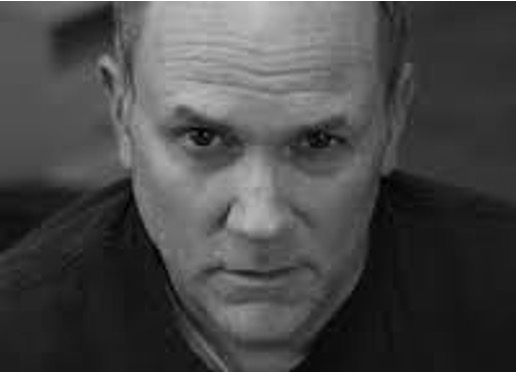
T. C. McCarthy

T. C. McCarthy is an award-winning and critically acclaimed southern author whose short fiction has appeared in Per Contra: The International Journal of the Arts, Literature and IdeasStory Quarterly and Nature. Baen Books released his latest novel, Tyger Burning, in July 2019. His earlier debut military science fiction trilogy (GermlineExogene and Chimera) was released in 2012 and is available worldwide. In addition to being an author, T. C. is a PhD scientist, a Fulbright Fellow, and a Howard Hughes Biomedical Research Scholar.

His story, “Zip Ghost”, appears in the Weird World War III anthology.


Tell me about yourself. Where are you from? Whatโ€™s your background?


Originally Iโ€™m from Leesburg, Virginia, and Iโ€™m a scientist who would rather work full time as a writer. All I want is an unlimited amount of money, absolute power over my own destination, and complete and total creative freedom; that should be easy to obtain, shouldnโ€™t it? In all seriousness, I think that the most fortunate people in the world are those that have the luck or the means to do exactly what they love for a career.


What kinds of stories do you write? Why?


I write stories that have literary merit โ€“ that at least try to push the boundary of language just a tiny bit. I do it to show that I can. I see a lot of Tor and Orbit authors claiming the mantle of writing โ€œliterary SFโ€ but they donโ€™t; they think that by having the most gay characters in a book, or by having alien races that have no gender is edgy or weird โ€“ and therefore literary. But it isnโ€™t. Literary is about bending language almost to the point where it breaks but doesnโ€™t; it works.


What author has had the greatest influence on your writing? Why?


Two authors: Michael Herr and Guy Sajer/Guy Mouminoux. Michael Herrโ€™s dispatches was the first book to electrify me because of the way it used language to describe war. Herr was an embed in multiple units during the Vietnam War and he brought almost a sense of beatnik descriptive powers that made the war leap from pages of his book, Dispatches. I like Guy Sajer for kind of the same reason, but less so for language. Sajer recounts his experience of trying to survive in one of the most horrific situations one could find himself in: fighting for the Germans on the Eastern Front of WWII. Sajer takes a matter of fact approach thatโ€™s like a constant string of gut punches.


Tell me about a time you almost died.


I almost died of thirst in Death Valley; thereโ€™s a reason they call it that, in case you didnโ€™t know. I was an undergraduate geologist doing field work and we decided to take a look at the โ€œRace Trackโ€ โ€“ a dried lake bed where the boulders move on their own and leave tracks. Itโ€™s 30 miles off road, in the middle of nowhere. We were in rental sedans and decided to take an off road trail that went over the nearest mountain range, which was fine until we got stuck and realized that the road had washed out and that we couldnโ€™t get back the way we came; on one side was a cliff, on the other was a mountain and one of the professors started crying because they both were convinced we were dead. It was a hundred and fifteen degrees and there was no shade anywhere. As the youngest one in the party, I grabbed the shovel and rebuilt the washed out sections of the road so we eventually got to civilization, which only took us fifteen hours. I was majorly dehydrated.


If you could live in any time period, when would it be? Why?


The 1990s. If I had my way it would be the 1990s all the time. The music was amazing, cell phones werenโ€™t a big thing so you had to interact with people face to face instead of texting, and I was in my 20s. Now that Iโ€™m over 50 everything hurts and the world is on fire. 


Story’s Soundtrack

Each of the stories in this volume evoked certain themes and emotions that can sometimes be approximated with music. The below video is the editor’s best interpretation of the feelings and themes that this author’s story evoked. Please note that this is only the editor’s interpretation. The author did not know this portion of the blog post existed until the editor published it.


Order Weird World War III Now


2020-10-06T00:00:00

  days

  hours  minutes  seconds

until

Weird World War III Release Date

Martin L. Shoemaker

Martin L. Shoemaker is a programmer who writes on the sideโ€ฆ or maybe itโ€™s the other way around. Programming pays the bills, but a second-place story in the Jim Baen Memorial Writing Contest earned him lunch with Buzz Aldrin. Programming never did that! His work has appeared in Analog Science Fiction & FactGalaxyโ€™s EdgeDigital Science FictionForever MagazineWriters of the Future, and numerous anthologies including Yearโ€™s Best Military and Adventure SF 4Man-Kzin Wars XVThe Jim Baen Memorial Award: The First Decade, and Avatar Dreams from Wordfire Press. His Clarkesworld story โ€œToday I Am Paulโ€ appeared in four different yearโ€™s-best anthologies and eight international editions. His follow-on novel, Today I Am Carey, was published by Baen Books in March 2019. His novel The Last Dance was published by 47North in November 2019.

His story, “The Ouroboros Arrangement”, appears in the Weird World War III anthology.


Tell me about yourself. Where are you from? Whatโ€™s your background?


Iโ€™m a software developer from Michigan. Iโ€™m also a lifelong writer, starting my professional fiction career in 2010.


What kinds of stories do you write? Why?


I dabble across genres: mostly science fiction, but occasional fantasy or mystery. I also have a habit of mixing mystery in my science fiction. I prefer near-future, near-space hard science fiction, but I go where the story takes me. I tend to write middle-length works, novelettes and novellas; but I write a lot of shorter work as well, and Iโ€™ve written two novels. A third should be released at the same time as Weird World War III.

Why? is a more difficult question. A lot of my writing process is subconscious. Tomorrow I might wake up with the urge to write a historical adventure story. But what would probably happen is that I would realize how much research that would involve, since Iโ€™m not much of a historian, and I would set it aside. I donโ€™t like to work that hard! With science fiction I need less researchโ€”in part because I can make up many details, and in part because this is where I live as a reader. Itโ€™s familiar territory for me. Iโ€™m a child of the Apollo era, of Star Trek and 2001, of Heinlein and Asimov and McDevitt. So as the old clichรฉ goes: Write what you know.


Which of your short stories is your favorite? Why?


โ€œToday I Am Paulโ€, the basis of my first novel, Today I Am Carey (Baen books, 2019). First itโ€™s my most successful story. It was nominated for a Nebula, it won the Washington Science Fiction Association Award, and it was in four yearโ€™s best collections. But more important has been the reader response. Readers tell me that they saw themselves in this story of an Alzheimerโ€™s patient, her family, and her android caretaker. They tell me that they feel better because someone understands what theyโ€™ve been through with their own loved ones. Thatโ€™s a high compliment for an author.


What authors have had the greatest influence on your writing? Why?


How much time do you have? A could list dozens, but Iโ€™ll restrict it to two.

I was an early subscriber to Asimovโ€™s Science Fiction Magazine, so I was there when Barry B. Longyear sold his first story. And his second, and his third, andโ€ฆ And not only was he a great writer (โ€œEnemy Mineโ€ is one of my three favorite short works ever), but he was the first emerging writer I knew of. Prior to Longyear, all the writers I read seemed to be established by the time I found them. Like they had always been there. But I watched from the sidelines as Longyear became a professional writer, and so I knew it could be done! It took another four decades for me to follow; but I would never have known how it worked without his example.

But during that forty years, I built a successful career as a software developer; and as a result, much of my reading time was devoted to the science and craft of software. I didnโ€™t make as much time for leisure reading, for science fiction. But a random trip to a bookstore led me to Jack McDevittโ€™s A Talent for War, and Jack reignited my science fiction flame. That book is one of my favorites, and Iโ€™ve gone on to read and reread everything Jack has written. My first Finalist in Writers of the Future, the story that persuaded me to keep writing, was inspired by Jack McDevittโ€™s Echo. And I was honored when Jack asked me to write the foreword to his collection, A Voice in the Night; and then honored again when he wrote a very kind blurb for my first novel, Today I Am Carey.

And because of my involvement in the writing community, Iโ€™ve gotten to meet both Barry and Jack. Some rewards canโ€™t be measured in dollars and cents.


Besides yourself, which other contemporary authors would you recommend?


Here are recent books Iโ€™ve enjoyed:

  • The Art of Madness by A.j. Mayall. He has a talent for mixing and matching tropes from multiple genres and turning them into something fresh and uniquely his. I first saw this in an anthology story in Cursed Collectibles, and I immediately went out and bought this book. I didnโ€™t regret it.
  • Spine of the Dragon by Kevin J. Anderson. I am sorry to say that Iโ€™m mostly burned out on epic fantasy. Iโ€™m sure thereโ€™s a lot of it thatโ€™s very good, but it just doesnโ€™t engage me. This book did.
  • A Star-Wheeled Sky by Brad Torgersen. Brad wrote a very exciting space opera here, with a nice twist on both science and empire. Iโ€™m looking forward to the sequel.Simon Says by Bryan Thomas Schmidt. This is like a classic 70s/80s buddy cop film, only set in the future with one of the buddies being an android. Itโ€™s the first in a series, and Iโ€™m enjoying all of them.
  • Split Feather by Deborah A. Wolfe. This book was a delight from start to finish, with a vivid protagonist who discovers her roots in the native communities of Alaskaโ€”and in a unique folklore and magic system that Wolfe makes very real.
  • Level Five by William Ledbetter. This was my absolute favorite book of 2018, a sweeping tale of artificial intelligence, space exploration, and a conspiracy to bring about the end of the world.

Story’s Soundtrack

Each of the stories in this volume evoked certain themes and emotions that can sometimes be approximated with music. The below video is the editor’s best interpretation of the feelings and themes that this author’s story evoked. Please note that this is only the editor’s interpretation. The author did not know this portion of the blog post existed until the editor published it.


Order Weird World War III Now


2020-10-06T00:00:00

  days

  hours  minutes  seconds

until

Weird World War III Release Date

“Santa’s Last Interview” Featured in Bards and Sages Quarterly

My story, “Santa’s Last Interview“, is featured in the October issue of Bards and Sages Quarterly. If you love journalists as much as I do, you’ll enjoy this story. Check it out when you get a chance.


Order Weird World War III Now


2020-10-06T00:00:00

  days

  hours  minutes  seconds

until

Weird World War III Release Date

Blog at WordPress.com.

Up ↑